 Menu

 Your reliable partner for analytical equipment and consumables
Menu
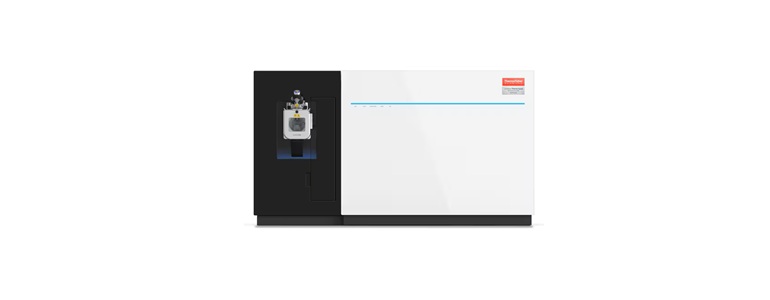
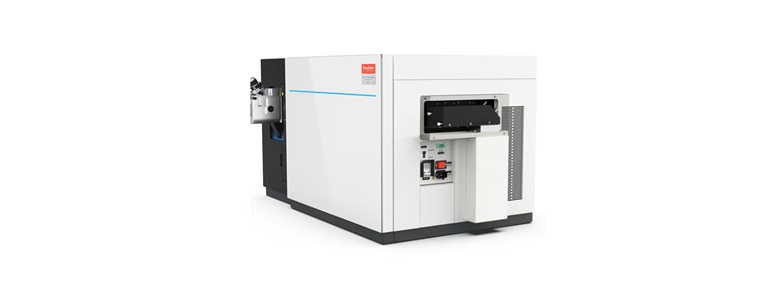
Thermo Scientific™ Orbitrap™ Tribrid™ Apex Mass Spectrometer combines highly sensitive linear ion trap detection with high-resolution accurate-mass measurement in the Orbitrap analyzer. Its flexible Tribrid architecture supports successive isolation and fragmentation stages to obtain additional structural information on small molecules, peptides, proteins, and complex molecular assemblies.
The QR5 segmented quadrupole mass filter, Active Ion Management (AIM+) technology, and dual ion-routing multipoles (Dual IRM) support efficient ion transmission and utilization. Parallel ion accumulation, transfer, and analysis improve instrument duty-cycle efficiency, including during complex MSⁿ experiments.
Standard CID and HCD fragmentation can be complemented by ETD/EThcD and UV- or IR-laser activation, depending on the configuration. These complementary fragmentation mechanisms expand capabilities for molecular structure elucidation, peptide sequencing, and post-translational modification localization.
Real-Time Library Search uses real-time spectral library matching to guide subsequent MSⁿ acquisition. AcquireX™ workflows support automated small-molecule profiling, while specialized proteomics configurations provide TMT SPS-MS³ quantitation and adaptive targeting capabilities.
The OptaMax™ Plus ion source provides stable electrospray ionization across a broad range of LC flow rates. The separate, integrated Auto-Ready 2 source enables scheduled or on-demand system checks and calibration without reconfiguring the LC-MS connection.
Xcalibur™ instrument control and application-specific method templates simplify method development. Depending on analytical requirements, the platform can be complemented by Compound Discoverer™, Proteome Discoverer™, and BioPharma Finder™ software for data processing and interpretation.
Small Molecule Edition — for metabolomics, lipidomics, pharmaceutical research, and natural-product structural characterization. The system provides an upgrade path to the MultiOmics Edition.
MultiOmics Edition — for proteomics, metabolomics, lipidomics, and glycomics, including DDA/DIA analyses and TMT-based quantitative workflows.
Structural Biology Edition — for protein and molecular-complex characterization using native MS, chemical crosslinking, hydrogen-deuterium exchange mass spectrometry (HDX-MS), and ligand-binding studies.
BioPharma Edition — for biotherapeutic characterization, including intact proteins, antibody–drug conjugates (ADCs), peptide mapping, and oligonucleotides.
The Native MS option extends the Orbitrap mass range to m/z 16,000 for MS¹ and m/z 20,000 for MSⁿ, n > 1, together with quadrupole isolation up to m/z 12,000. This expands capabilities for large proteins and molecular-complex analysis.
PTCR reduces ion charge states to simplify complex spectra. Direct Mass Technology enables individual-ion measurements with determination of both mass-to-charge ratio and charge, supporting the analysis of heterogeneous molecular systems.
ETD, PTCR, Native MS, and Direct Mass Technology are configuration-dependent options for the MultiOmics, Structural Biology, and BioPharma Editions and are not standard features of the Small Molecule Edition. UV- and IR-laser solutions are alternative options selected according to application requirements.