 Menu

 Your reliable partner for analytical equipment and consumables
Menu
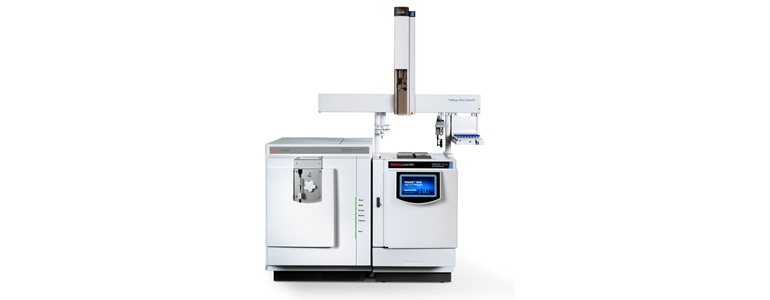
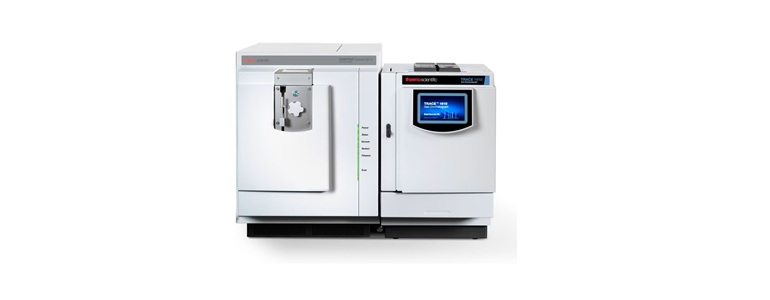
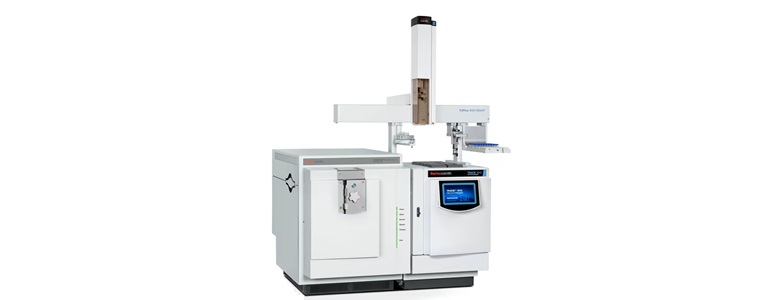
Orbitrap Exploris GC S combines gas chromatographic separation with a hybrid quadrupole-Orbitrap architecture for high-resolution accurate-mass (HRAM) measurement. The platform brings quantitation, screening, and compound confirmation into a single workflow, with a focus on dependable performance in complex food and environmental matrices.
The Orbitrap analyzer provides resolving power of up to 60,000 FWHM at m/z 200 and a Full Scan mass range of m/z 30–3000. Acquisition rates reach 40 spectra per second at a resolution setting of 7,500 FWHM at m/z 200. High resolving power helps distinguish target analytes from matrix interferences.
The Advanced Electron Ionization (AEI) source is designed for efficient ionization, high sensitivity, and stable performance across extended analytical sequences. Its robust construction supports reproducible trace-level measurements under demanding laboratory workloads.
The system supports Full Scan and targeted selected ion monitoring (tSIM). Full-scan HRAM spectra provide information on predefined targets as well as additional sample components. Previously acquired Full Scan data can be retrospectively investigated for new compounds without reinjection, provided the required information was captured during the original analysis.
NeverVent™ technology, incorporating the Vacuum Probe Interlock (VPI) and V-Lock™, enables column replacement and ion-source removal for cleaning or filament replacement without venting the mass spectrometer. This reduces routine maintenance downtime and simplifies the return to analytical operation.
Chromeleon™ CDS and TraceFinder™ software provide instrument control, data processing, and reporting capabilities according to the selected configuration. The dedicated Chromeleon Dioxin HRAM eWorkflow includes method, processing, and reporting templates, together with checks for internal standard recoveries, ion ratios, and toxic equivalency (TEQ) calculations.
Orbitrap Exploris GC S supports the analysis of dioxins and furans, dioxin-like polychlorinated biphenyls (dl-PCBs), pesticides, and other persistent organic pollutants. With appropriate sample preparation and gas chromatographic methods, applications can be extended to volatile PFAS and other emerging contaminants.