 Menu
Menu
 Your reliable partner for analytical equipment and consumables
Menu
Your reliable partner for analytical equipment and consumables
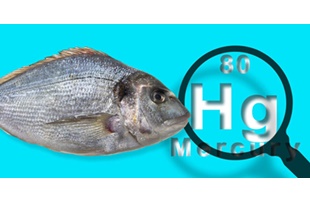
MenuAfter release into the environment, usually as inorganic mercury, aquatic microorganisms can biomethylate mercury and therefore change its chemical form to methylmercury, which is a major toxicological disaster.
Methylmercury is highly bioavailable and can cross the blood-brain barrier in humans. It forms stable chemical bonds with thiol groups – for example, free cysteine leftovers – commonly found in proteins. This bond is extremely strong and cannot be broken. According to the literature, methylmercury makes up 90% of the total mercury in tuna. Although humans can be exposed to mercury from food, drink, and even air, consumption of contaminated fish is the most important cause of mercury poisoning, according to a report by the US Environmental Protection Agency.
Which fish accumulate methylmercury?
The extent to which fish accumulate mercury depends on their position in the food chain, and to a lesser extent on the fishing area, but especially on their age at the time of capture. Fish that are lower in the food chain and grow relatively quickly are less contaminated. This group includes well-known edible fish such as cod, haddock, hake and herring. Fish from aquaculture usually do not contain mercury or show extremely low levels of heavy metals. However, large, old predatory fish, particularly those occupying a high trophic position at the end of the food chain, may have elevated levels of mercury as a result of years of accumulation (age accumulation). These include large fish species such as swordfish, sharks, marlin and large tuna.
Other toxic metals, such as lead, do not usually play a role in fish and fish products; only in shellfish and shellfish products higher levels have been determined in individual cases, but the applicable maximum levels have not been exceeded. In some cases, elevated levels of cadmium have been found in squid products. Cadmium in squid is mainly concentrated in the viscera. The reason for the occurrence of elevated levels of cadmium may be contamination of the edible parts or an expression of improper processing.
How is mercury in fish analyzed?
Simply measuring the total amount of the element in a sample does not provide the full picture in the case of elements that can be present in different chemical forms, such as mercury. Arsenic can also be found in different chemical forms depending on the type of sample. While rice contains mostly the inorganic species (As (III) and As (V)), fish and seafood again accumulate large amounts of arsenic, but in the form of organic molecules, mainly arsenobetaine (the arsenic analogue of trimethylglycine), which is significantly less toxic.
To determine the safety or toxicity of a sample, it is necessary to identify and quantify the different types of element that may be present in the sample. The method of choice for methylmercury is often gas chromatography (GC) coupled with inductively coupled plasma mass spectrometry (GC-ICP-MS).
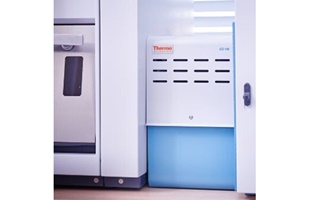
By seamlessly coupling GC and ICP-MS systems, even applications with the most demanding detection limits can be easily implemented. The GCI series interface allows for simple, reliable, and dynamic measurement of samples down to the sub-ppt range.
Sensitive Trace Element Detection with ICP-MS
When sensitivity is key, inductively coupled plasma mass spectrometry (ICP-MS) is the analytical solution of choice for trace element determination down to ppt levels. Modern ICP-MS instruments offer comprehensive interference suppression and innovative solutions to increase sample throughput. Single quadrupole ICP-MS systems, such as the Thermo Scientific™ iCAP™ RQ ICP-MS, are commonly used in many laboratories, combining consistent interference rejection with short measurement times, allowing robust, high-performance analysis. Interference rejection can be achieved by using a collision/reaction cell (CRC) to remove the most common polyatomic interferences.
A more advanced approach to overcoming more challenging interferences is to use a triple quadrupole ICP-MS (TQ-ICP-MS) instrument, such as the Thermo Scientific™ iCAP™ TQ ICP-MS, which offers routine rejection of all types of interferences, including doubly charged ions. Triple quadrupole ICP-MS is a tool for the routine analysis of environmental water samples, such as groundwater, surface water, and wastewater. The Reaction Finder method development assistant enables rapid, hassle-free analysis method development even for inexperienced users.
For more information HERE.